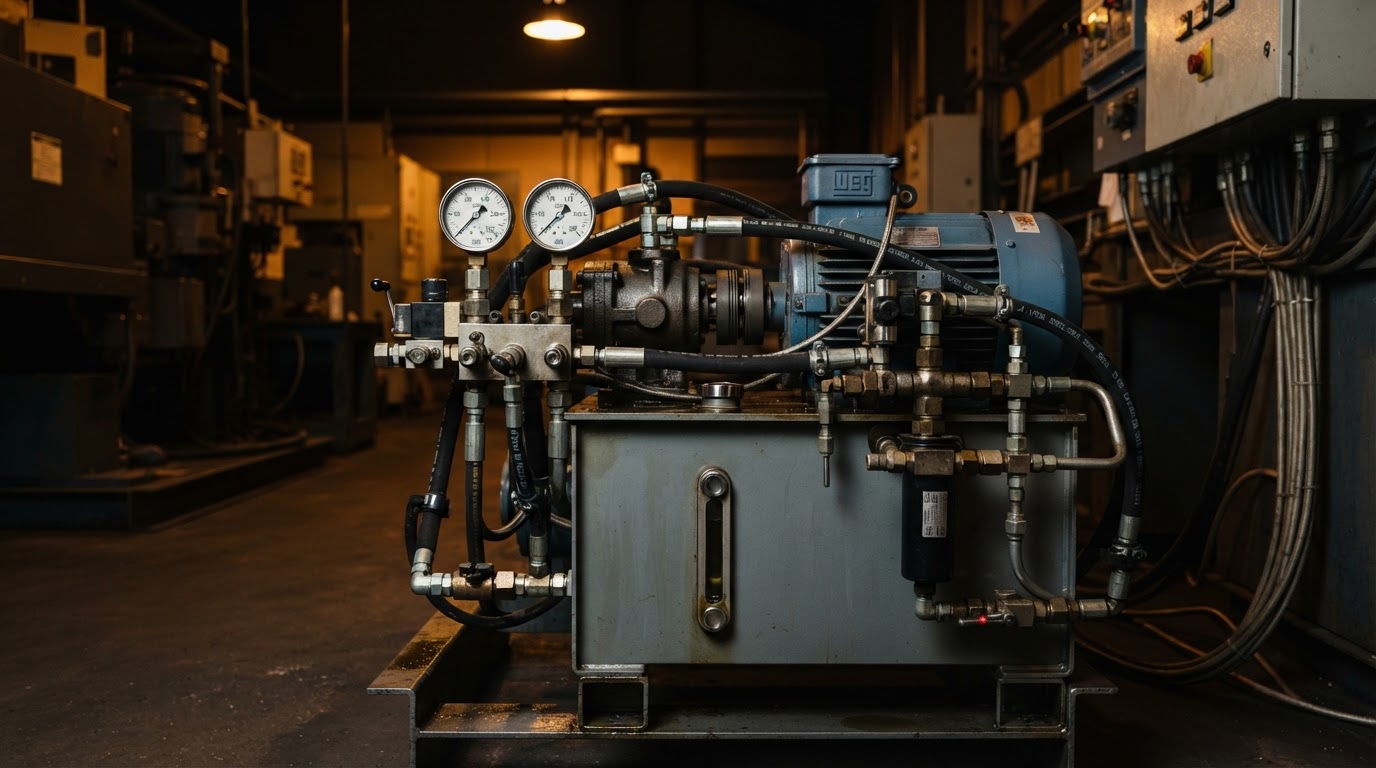
When a hydraulic lift is taken out of service for a ram seal change or power unit overhaul, the focus naturally falls on the cylinder and the pump. But the auxiliary systems around the hydraulic installation are often what determine whether the repair holds up after handover — or whether the contractor is back on site within weeks.
For lift service providers managing hydraulic works for clients, here are the auxiliary checks worth building into the scope before the ram goes back into operation.
Oil condition and temperature
Hydraulic oil degrades over time. Contamination from moisture, wear particles or degraded seals changes the oil's viscosity and lubricating properties, which in turn accelerates wear on the pump and valve block. Before refilling, the oil should be sampled and assessed — not simply topped up.
Temperature is the other half of the equation. Hydraulic systems running hot break down oil faster and place seals under additional stress. If the installation runs above the oil's rated temperature range, a cooler unit may be required to protect the new seals and extend the service interval.
Rupture valves and safety devices
The rupture valve (or burst valve) is the primary safety device on a hydraulic installation, preventing uncontrolled descent in the event of a pipe or hose failure. During a ram overhaul, the rupture valve setting should be verified and tested — not assumed to be correct because the installation was previously in service.
Valves that have sat unchanged for years can stick or drift out of calibration. A functional test confirms the valve still operates within the required parameters before the installation is handed back.
High-pressure hoses and pipework
Flexible high-pressure hoses have a finite service life. A hose that looks serviceable on the outside may be degrading internally, and a failure under pressure is a serious safety event. Where hoses are accessible during a ram overhaul, inspecting and replacing aged hoses as a precaution is far cheaper than a return visit after a burst.
Hard pipework should also be checked for weeps at joints and for corrosion at support points, where vibration and movement can work-harden fittings over time.
Cooler units and auxiliary motors
Where the installation includes a forced-air cooler or circulation pump, these auxiliary motors should be tested alongside the main power unit. A failed cooler is a common root cause of repeat seal failure — the new seals are installed, but the system continues to run hot and degrades them again.
Fan motors, oil coolers and circulation pumps are straightforward to bench-test and, where necessary, rewind or replace during the same shutdown window.
Bringing it into one scope
The value of bundling these auxiliary checks into a ram overhaul is simple: the installation is already out of service, the access is already in place, and the documentation is already being compiled. Treating the auxiliary systems as part of the same scope — rather than a separate, later call-out — keeps the contractor's handover pack complete and reduces the likelihood of a return visit.
At EES Vertical Transportation, hydraulic ram seal replacements, power unit overhauls and valve servicing are carried out as a single trade scope, with full RAMS documentation and testing before the installation returns to service. Operating from Middleton, Greater Manchester, attending sites UK-wide. See our hydraulic lift repairs service for the full scope.