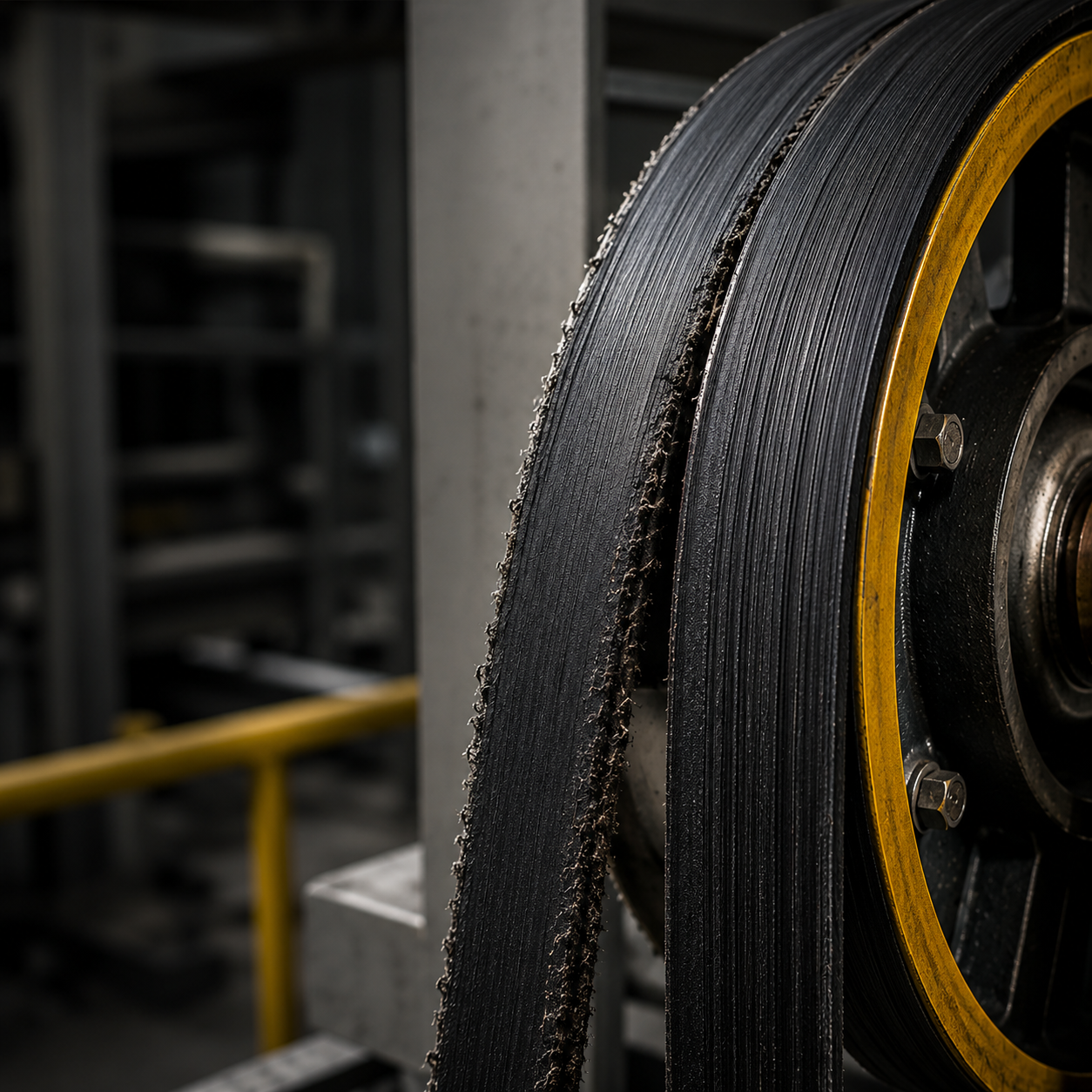
Traction belts have become increasingly common in modern lift systems, offering smooth, quiet operation and high efficiency. However, premature belt wear remains a significant challenge for lift maintenance teams. Simply replacing a worn belt without addressing the underlying cause guarantees that the problem will return.
Building on our extensive experience in traction diagnostics, here is a technical deep-dive into the top causes of premature traction belt wear and how to prevent them.
1. Misalignment of Pulleys and Sheaves
One of the most common culprits of premature belt wear is misalignment. Even slight deviations in the alignment between the drive sheave, divertor pulleys, and car/counterweight suspension points can cause the belt to track improperly. This leads to uneven wear on the belt edges, fraying, and in severe cases, the belt jumping off the pulley entirely.
Prevention: Utilizing precision laser alignment tools during installation and routine maintenance ensures that all components are perfectly aligned. We have successfully resolved persistent belt jumping issues by diagnosing and correcting twisted mobile traction beams that knocked pulleys out of line.
2. Incorrect Belt Tension
Traction belts must be tensioned precisely according to manufacturer specifications. Over-tensioning places excessive stress on the belt's internal steel cords and the machine bearings, leading to premature failure. Under-tensioning causes slippage on the drive sheave, resulting in accelerated wear on the belt's polyurethane coating.
Prevention: Regularly checking and adjusting belt tension using calibrated tension meters is crucial. It is also important to ensure that tension is equalized across all belts in a multi-belt system to prevent uneven load distribution.
3. Debris and Contamination
The polyurethane coating of traction belts is susceptible to damage from debris, dust, and chemical contaminants. Grit trapped between the belt and the sheave acts as an abrasive, rapidly wearing down the belt surface. Exposure to oils or harsh cleaning agents can also degrade the polyurethane material.
Prevention: Maintaining a clean lift shaft and machine room is essential. Regular inspections should include checking the belts and sheaves for any signs of contamination and cleaning them using only manufacturer-approved methods.
4. Sheave Groove Wear
While belts are softer than steel ropes, they can still cause wear on the sheave grooves over time, especially if dust or grit is present. Worn sheave grooves alter the traction profile and can damage new belts installed on the old sheave.
Prevention: Inspecting sheave groove profiles during belt replacements is vital. If wear is detected, EES Vertical Transportation can provide expert sheave re-grooving or replacement services to ensure optimal traction and belt longevity.
Effective diagnosis is the key to preventing premature traction belt wear. By addressing root causes rather than just treating symptoms, lift service providers can significantly improve reliability and reduce long-term maintenance costs. For worn sheaves identified during diagnosis, our traction sheave repair and re-grooving restores the groove profile, and our rope and belt replacement service covers the full scope in one quote.